Showing posts with label Short Stories. Show all posts

Saturday, 5 May 2012

In Le Havre


A short story written by Lowry in 1934. Lowry’s London agent Innes Rose placed it with Life and Letters Volume X, No. 55 July 1934 edited by Hamish Miles.

The short story was originally intended for a collection to have been called So We Live Foever Taking Leave. Three stories from this period ‘In Le Havre’, ‘Bulls of the Resurrection’ and ‘Hotel Room in Chartres’ are drawn from incidents in Lowry’s unhappy first marriage. "..it is your story, the tragic one we thought of going down on the train, "I don't love you, I never have," you remember he cries as the ship is going; I have put so much of what I feel for you..into this story that I find difficult to write to you" (Collected Letters Vol. 1 149).

The story can be read as a love letter to his first wife Jan Gabrial. The partly autobiographical story is based on Jan’s departure for America from Le Havre on the S.S. Ile de France to see her mother who she hadn’t seen for two years. The trip followed the trauma of Jan’s abortion in France. (Jan Gabrial Inside The Volcano Pgs. 58-59).


The story’s narrator is an Englishman who has just seen his American wife Lee off to the USA by ship. The narrator meets an American newspaperman in the Hotel-Café Bar near the docks in Le Havre. The narrator tells the newspaperman that he is fearful of never seeing his wife again but wants to sort out his life before they meet again. The narrator refuses the advice of the newspaperman to go after his wife. The reporter accuses the narrator of only really loving his own misery and not his wife Lee. 

The story probably reflects the internal battle Lowry was facing at the time following his insistence that Jan had an abortion combined with a sense of loss for Jan after their recent marriage in Paris. Though Sherrill Grace warns not to read too much into the story about Lowry's relationship with Jan who helped in writing the story. (Sherrill Grace Swinging The Maelstrom and Jan Gabrial Inside The Volcano Pg. 59). “It is your story, the tragic one we thought of going down in the train” Lowry to Jan Gabrial May 1934 (Collected Letter Vol 1)

Lowry quotes 2 lines from Clere Parson’s poem “Never Before Has Seemed Any Event…” as an epigraph to the story, “A ship crossed, and beyond/Hull down, the lone sea’s curve”.

The use of the hotel sign Hotel-Café-Bar – Tout Va Bien-Comfort Moderne is an early use of signs in Lowry's work. Tony Kilgalin in his 1973 book on Lowry notes the irony of the words Tout Va Bien.


The story opens and closes with almost a dirge written in italics containing the lines “Listen the far threnody of sirens in the haze”. The threnody or hymn of mourning may be for the lost child that has been aborted or signify Lowry’s loss of Jan. Having the Sirens sing the dirge conjures up allusions to Greek mythology. Maybe Lowry is alluding to Jan as one the three dangerous bird-women, portrayed as seductresses who lured nearby sailors with their enchanting music and voices to shipwreck on the rocky coast of their island. 

Lowry’s use of the phrase “threnody of sirens” is a probably taken from John Curtis Underwood’s poem 'The Sands' from the collection The Iron Muse (1910) featured in a part called “The Sea”. These poems reflect other Lowry obsessions including the poems “The Lighthouse”, “The Liner” and “The Coal Passers”. Compare Underwood’s lines; “We are snares, our shallows lie underneath the smiling sea; Lure the sailors till the sky changes, blackens; hard alee, Gleaming breakers surging high, shout our sirens’ threnody.”


The story follows Lowry's often used journey metaphor of a sea journey involving a ship referred to this time by its real name. A rail journey by the “boat train” is mentioned. The story contains references to Lowry’s haunts in Paris during 1934 such Porte Maillot and the Martinque Rhumerie Bar. We also get a hint in the topography of the story as to where Jan may have had her abortion – possibly the American Hospital in Paris. There is also a mention of the American Express office in Paris which Jan and Lowry both used.

Lee was one of the nicknames given to Jan Gabrial by Lowry. The name Lee predates the character Lee Maitland in Under The Volcano and maybe drawn from Edgar Poe’s poem 'Annabal Lee'. Lowry also has the American reporter quoting from the John Donne poem 'The Broken Heart'; “My ragges of heart can like, wish and adore, but after one such love can love no more”

The reporter in the story refers to several American locations all of which Lowry had not visited if ever at the time of writing the story. The places referred to include are either in Westchester County ( ChappaquaDobbs FerryLarchmontMamaroneck, Mount KiscoOssining and Peekshill  or New York City (2nd Avenue El, 17th Street, 45th Street, East River, East 45th Street, Louis’s on 17th Street, Queensboro Bridge and Welfare Island). Did Lowry chose place names because of undiscovered links to Jan Gabrial who helped him write the short story? . Lowry refers to Westchester County as “where the big money lived” which Jan may have aspired to. Lowry also mentions the Gulf of Tehuantepec (Lowry spells as Tehantapec). This is one of the first mentions of Mexico in Lowry’s work and alludes to his reading of Wallace Stevens’s 1924 poem “Sea Surface Full of Clouds” set off Tehuantepec. 


Lowry also seems to be aware of the concept of nympholepsy in the references made by the newspaperman to the “pursuit of the nymph” and “That hell, they say, to experience desire which you can no longer gratify”. Lowry was probably aware of Conrad Aiken’s poem “The Charnel Rose” 1915 which has the theme of nympholepsy. The end of “In Le Havre” echoes some of the imagery in Aiken’s poem. Aiken defines nympholepsy as “that impulse which sends man from one dream or ideal to another always disillusioned and therefore always inventing new fictions”.

Lowry makes allusions to classical mythology entioning Sisyphus, Cerberus, Charon and Phoenix.

The end of the story involves an almost surrealistic scene in which the newspaperman relates what he has “deep down inside of him”. He reminisces about New York and wants to return like Lee now “this riot story is dead” (a reference to the 6th February 1934 crisis in Paris). The scene is punctuated with images of “the terrible, terrible sea”, being buried and drowning. The ending seems to be based on a drunken reverie experienced by Lowry as he sees drunks, a man starved to death, “a big shot” smoking a cigar, Farrell the cop, and a big turtle in a brown coat floating in the dock. The reporter believes the police searching the dock to be “Mr Charon” and his hallucinations reveal Cerberus and Sisyphus. The scene is set in a nightmarish world of fog ending with the newspaperman going to a bar for another drink. This may reveal the extent Lowry realised how he was descending into alcoholism portending the future of his internment in Bellevue Hospital in New York.

Hotel Room In Chartres


A short story published in Story 5 (September 1934) Pgs. 53-58.

The short story was originally intended for a collection to have been called So We Live Forever Taking Leave of interconnected stories set in Europe. The partly autobiographical story is based on a trip Lowry and Jan Gabrial made to Rouen in 1934 during which time they visited Chartres. The trip was intended to reconcile their differences after Lowry read Jan’s diaries in Paris weeks after they had married. Gabrial says that Lowry had been thinking of returning to sea in response to the discovery of her diaries (Jan Gabrial Inside The Volcano Pg. 57). However, they were reconciled; “To us Rouen was to become a symbol, the place where we began the healing process and licked each other’s wounds.” (Jan Gabrial Inside The Volcano Pg. 57). Though the trip to Chartres was preceded by an argument, which was incorporated into the short story.

The story concerns an unnamed bosun – a character that Lowry uses several times in his work. Lowry uses a theme which runs through his work during this time – the sailor who gives up the sea for his lover but who desires to return; “he had left the sea, no longer able to endure the pain of its reality, as now without the presence of that reality he could no longer endure the pain of its illusion” (Psalms Pg.19).


The story opens with the bosun looking out over 
Alésia in Paris comparing the industrial landscape of smoking factories to the “forlorn pain of the sea” with its fog and rain. The lovers have been quarrelling and the bosun reflects on the “the sweetness of that farewell” before he went to sea. The bosun struggles with the urge to return to sea or return to Chartres, where they were once happy. He decides to return to Chartres catching his wife off guard and she refuse to go with him. He then makes his way to the station contemplating why he wants to go to Chartres by himself; “ he asked himself why he should want to go Chartres, of all places, alone, when Chartres was where their own life had already come into being. They both knew that, Chartres was his wife, his very blood, to him”. Thus Chartres comes to reflect the symbolism of Rouen noted by Jan Gabrial. His wife appears at the station just as he is about to leave on the train. Her appearance arouses tenderness in him, which subdues the “brute” in him. He suppresses his bitter thoughts that she has staged a dramatic reconciliation at the last minute. He buys her a ticket for them to go to Chartres together. The tension between the lovers does not immediately subside, as they remain silent in the compartment. He fears that his occasional desire to hurt his lover, like an angry ocean, will cast their relationship onto the rocks and he will lose her. 


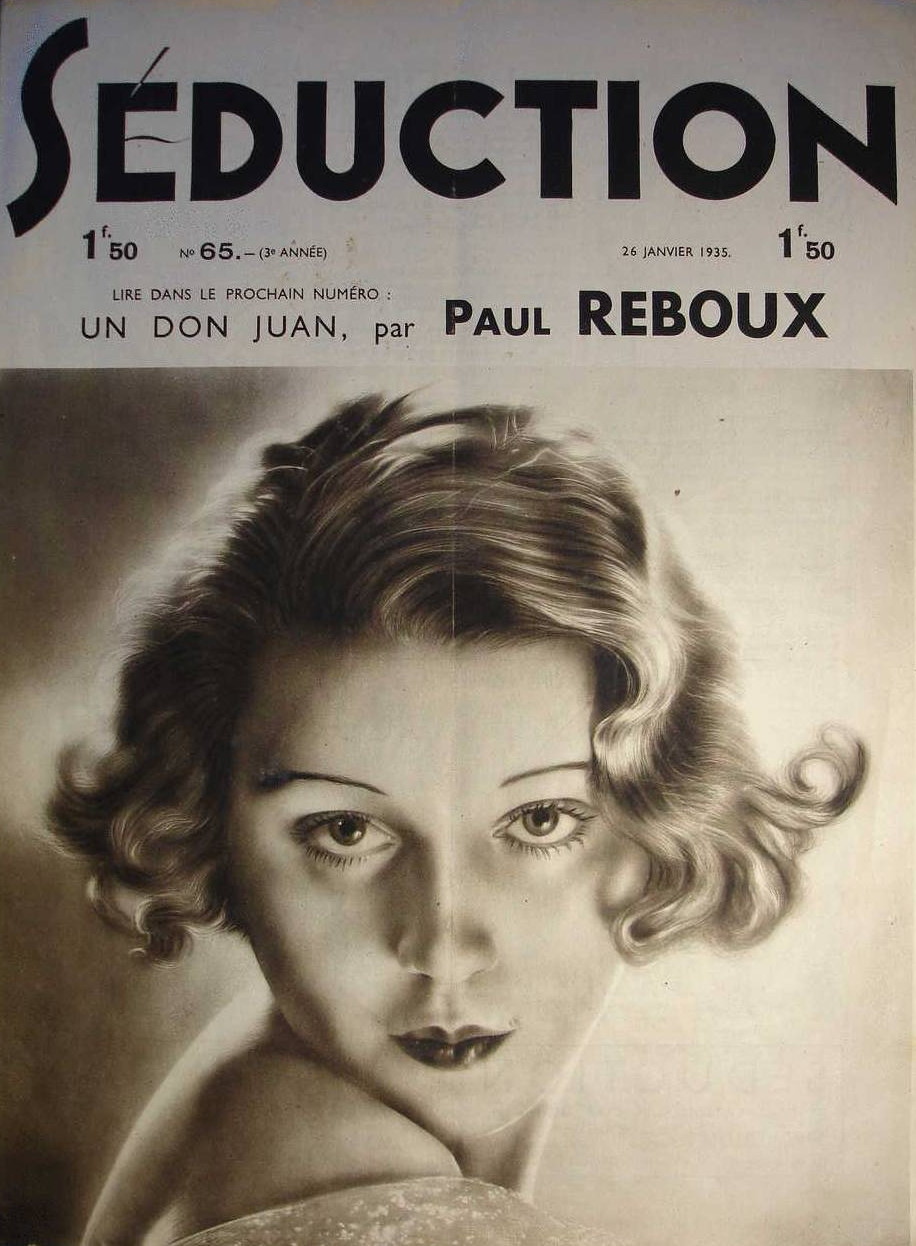
Four sailors singing in the corridor of the train break his contemplation. His wife realises that the former bosun would prefer to be going to sea with them rather than being with her. The tension increases again as the sailors' intrusion opens up the old wound of his desire to return to the sea. The sailors pass around a copy of a magazine called Seduction reading out the adverts from women such as ‘Velvet Eye’, ‘Modern Eve’ and ‘Butterfly’ looking for partners/lovers/husbands. 

The sailors’ camaraderie leads to the bosun thinking of all the times he has travelled on trains to ports to begin new voyages. These thoughts lead to an angry outburst; “Yes, I do wish I were back with them.” His wife leaves the compartment crying. The bosun joins the sailors in a drink but he gives the bottle back when his wife returns. The bosun reiterates his desire to return to the sea. He explains that the dangers sailors face leads to a kind of comradeship. The bosun wishes the sailors a good voyage when they part company at Chartres. The couple then discover that the sailors are going home and not to sea. The both laugh at their mistake and the irony that their quarrel has been caused by a misunderstanding. The story ends on a positive note as did Lowry’s and Jan’s trip to Rouen; “And up in the only room in the world they were folded together in each other’s arms crying with joy that they had found each other once more.”

The short story is important for revealing Lowry’s reading at this stage of his creative development. The story has overtones D.H. Lawrence; “ The moon drew softly the outgoing tide of the woman towards the calming sea of the man”. More importantly for Lowry’s creative development is the reference to Baudelaire’s “forest of symbols” which later became an important allusion for Under The Volcano; “Why aren’t you more like Father Neptune? He was asking himself – when the four sailors who had been in the corridor entered the compartment. He gave his wife a triumphant look: See how the word is a forest of symbols-“ Lowry is referring to the first quatrain of Charles Baudelaire’s sonnet “Correspondence” (See Patrick McCarthy Forest of Symbols Pgs. 44-45).

Lowry uses a refrain from a French song "Il était un petit navire" (There was a little ship) is a traditional French song that is now considered a children's song, despite its macabre tone. Lowry gives the lyrics Ohe Kalo etc a hidden meaning as the lie in the text – “a forest of symbols”.


Lowry uses sea and ship imagery to map out the landscape both real and imagined in a similar manner to of his other works e.g.; the Eiffel Tower is likened to a lighthouse, “the quay’s gray womb”, “like a ship letting off steam in her winches”, and “set wet iron, freshly leaded”. The story is littered with nautical references similar to other early stories as Lowry invests his time at sea into his creativity; voyages, open sea, in the doldrums, in irons, he assigns roles to the sailors - bosun, lamptrimmer, carpenter, able seaman, fireman, donkeyman who appear in other stories and Ultramarine, wash-down “just square up the after deck”, derricks, coaling the ship, one of the “black gang”. There is also a reference to the Singapore red light district familiar to sailors in the 1930s - “see you in Malay Street”. 

Lowry uses advertisements as in other short stories and novels; electric notice for Sandwiches, Paniers Repas, Provisions and “Passez vos vacances a la mer”.


Lowry mentions several locations in Paris which we must assume he was familiar with as he stayed in Paris between Winter 1933 and Summer 1934; Avenue de Chatillion, Alesia Metro, Montparnasse-Bienvenüe Metro and Paris Montparnasse Railway Station

There are references to several locations in Chartres; St. Piat Chapel at the south door of Chartres Cathedral, Chartres Railway Station, Chartres-Champhol Aerodrome, Grotte Luminaire and the Café Jacques Restaurant Bar du Cinema. Lowry mentions Ruelle de la Demi-Lune, which was actually in Rouen - the real location for the events of the story. He refers to Maintenon and St. Prest where he stayed with Maurice Sachs and Henry Wibbels in 1934.

Lowry also refers to his 1931 voyage to Norway, which is depicted in his unpublished novel In Ballast to the White Sea; the rail journey from Liverpool Exchange Station to Preston (Prester) to join his ship S.S. Fagervik (Suley in the story) and Archangel, the use of the Norwegian word fyrbotere – “one of the black gang”. Lowry also refers sea voyages; one from Birkenhead on the
Mentor (possibly Pyrrhus which Lowry sailed onto the Far East in 1927) and the second from Oslo on the King Haakon – there is no record that Lowry ever sailed out of Oslo.

Lowrt refers to the short story in his notes for Chapter XL111 of his incomplete novel La Mordida; "I shall never write this: I shall never write this: I shall never write this: fumed the train. Memories of other trains: Hotel Room in Chartres, Metal, perhaps. (La Mordida Pg. 291).


Goya The Obscure


A short story by Lowry published in Venture 6 (1930): 270-276. The title alludes to Conrad Aiken’s poem ‘Goya’ (subsequently incorporated into Aiken’s novel Blue Voyage) and to Hardy’s Jude The Obscure. ‘Goya’ was an important poem for Lowry (The Letters of Conrad Aiken and Malcolm Lowry 1929-1954 Letter 65), who later compared Under The Volcano to Hardy’s novels, which are similarly dark and fatalistic (Collected Letters Vol. 1, Letter 210). The story can be read now as a draft for Ultramarine; Lowry used parts of it in Chapter 2 in the same manner as he re-worked the short stories ‘China’, ‘On Board The West Hardway’ and ‘Port Swettenham’.


Joe Passalique, a trimmer on the 'Dimitrios N. Bogliazides', has returned from a voyage to the East where he contracted syphilis. Drinking in the Birkenhead Docklands (at the Dolphin Hotel) and mulling over what he has done since returning home, he tells his old bosun that he has syphilis. The bosun tells him not too worry too much, as he has had V.D. several times. Joe says that he was going to marry his girlfriend Poppy, who is pregnant, but now he cannot. The bosun offers to help later that night. Joe leaves the pub, making his way home to Liverpool on the ferry. He follows women looking for sex, then reaches the Museum of Anatomy, which he enters, to confront the syphilitic models there. 

The story is the first manifestation of Lowry’s obsession with syphilis, which Goya was thought to have had, as Aiken reveals in Blue Voyage in passages before the incorporated ‘Goya’ poem and later with: “The syphilitic family in the cobbled mud of Portobello Road. Goya” (Blue Voyage 103). Joe Passalique has contracted syphilis in the brothels of the Japanese port of Miike. Lowry refers to two related publications: ”The effects of venereal disease are grave and far-reaching” (272) is a quotation from the 1916 report by the Royal Commission on Venereal Disease; “Man Know Thyself”, “What a terrible account he will have to give of himself on the Judgement Day” and “To the pure all things are pure” are cited from the guide book to the Liverpool Museum of Anatomy. 

The story is constructed, like the later Ultramarine, with passages of naturalistic description in real locations, dialogue between the main characters, snatches of overheard conversation, and stream of consciousness. Like Blue Voyage or Joyce’s Ulysses, it offers quotations from poets and writers, lines from songs, and lists of observed detail from posters, timetables and signs. It opens (and ends) by quoting one of Gerard Manley Hopkins’s “terrible sonnets”, ‘Carrion Comfort’, to parallel Joe’s despair with Hopkins’s desolation “as the self-dramatising convert who has become the object of his own disgust and of God’s rage and abandonment” (Jill Muller Gerald Manley Hopkins and Victorian Catholicism Pg 128). 

The opening paragraph contains images from Elizabethan and Jacobean writing associated with prostitution and venereal disease. “Yellow-toothed” and “yellow stained” are precursors to “the slattern” who sits at the bar: “most yellow ladies are as Lustful as their Goddess (Venus)” ( Gordon William A Dictionary of Sexual Language and Imagery in Shakespearean and Stuart Literature Pg. 1559); “pickles” alludes to pox-treatment, and “froth-ringed” alludes to semen. 


Inigo Jone's Costume Design for Torchbearer of Oceania in Jonson's ‘Masque of Blacknesse’

The myth of Venus born from the foam produced by Uranus’s castration derives from Ben Jonson’s ‘Masque of Blacknesse’ (1605), as used in the final chapter of Blue Voyage; and the nightmare vision of the policeman who walks down Great Homer Street infecting people with V.D. with his evil “wand” alludes to: “this rod charmes her to be still and the caduceus… for it is like the Mercurian wand”, from Jonson’s Academy of Love (1641). “Some very nice young carrots” may be a line from an unidentified song, but their phallic shape is obvious; while “The old old lady carrying a white rose” alludes more obliquely to the sores of syphilis. 


 Illustration for A.P. Herbert's poem 'Nocturne' in 'Ballads for Broadbrows' 1930

Joe, who has written for the left-wing New Statesman, quotes from other poets and writers; Hopkins’s ‘Spelt Sibyl’s Leaves’: “Earnest, earthless, equal, attuneable”; Thomas Hardy’s ‘Neutral Tones’: “They had fallen from ash and were gray” (also in Ultramarine); “And talk of James Joyce in a bronchial voice” from A.P. Herbert’s “Nocturne”; Osbert Sitwell’s “Eunuch Arden”; Robert Graves’s ‘Against Clock and Compasses’: “three card shufflers, magic men”; Chaucer’s Pardoner’s Tale; “stinking codful-filled of donge and of corrupcioun?”; Balzac’s The Quest of The Absolute: “hear me imponderable and impalpable”; T.S. Eliot’s 'Sweeny': “a eunuch among nightingales”; Terence’s The Eunuch :“about the eunuch at the athletics sports”; Keats’s ‘Ode to a Nightingale’: “Is that you Ruthie, there among the corn?”: Beatrix Potter’s Peter Rabbit: The Adventures of Jeremy Fisher and the Tailor of Gloucester; Edgar Allan Poe’s ‘Eureka’; “That in the original unity of the first thing lies the secondary cause of all things with the germ of their inevitable annihilation”; Charles Reades’s The Cloister and The Hearth: “Stupid as swans” and James Wood New World Vistas: "with a cold monstrous insistency".

 Postcard of Sabang 1920's

Postcard of Iloilo circa 1920

Lowry further uses the names of Indonesian and Philippine places (Sabang, Iloilo and Zamboanga, which he had never visited) from Richard Eberhart’s ‘A Bravery of Earth’; Shelley’s ‘Ozymandias’; the Kolbrin Bible: “no normal child to protect from the destroyer”; and “ware shoal” from Rudyard Kipling’s ‘The Bell Buoy’. An early reference to theosophy (also in Ultramarine), which mentions pre-natal influences and heredity, paraphrases Lilian Edger’s Elements of Theosophy.


The main influence on the story was Conrad Aiken, whose ‘Goya’ poem (274) is followed by other lines from Blue Voyage: “That’s me, do you hear? And squeeze their little juices out, in arid hands, insensitive!”. Lowry capitalises some of Aiken’s words in much the way that the Museum of Anatomy guidebook is cited in Chapter 3 of Ultramarine. Aiken’s short story, ‘Costumes By Eros’, informs the opening of Lowry's story, and the name ‘Poppy’ may have been influenced by “The poppy is Europe, and also Cynthia” (Blue Voyage, 97). Lowry uses several words used variously by Aiken: “strange melody” from ‘The Charnel Rose’, “slattern” from ‘Goya’, “serge” from ‘The Costumes’; “froth” from ‘Costumes By Eros’; “dies irae” from ‘John Deth’; “dream-bright face” and "wraith" from ‘The House of Dust’; and “yellow-toothed the piano”; “exophtalmically”, “fatality of decay” and “squamous” from Blue Voyage. The sentiment, “let us repeat together that poem with all its contrapuntal devices which harmonises with my being” makes reference to Aiken’s theory of poetry (in Poetry A Magazine of Verse); while the dialogue between two stevedores from New Orleans (which Lowry had not then visited) may have been influenced by the several references to New Orleans in Aiken’s novel. 


 Cattle being driven at the Pier Head, Liverpool 1930's

Crowds awaiting ferry boat at Pier Head, Liverpool 1920's

Lowry uses exact local references to Birkenhead and Liverpool for the first time. He mentions in Birkenhead: Cleveland Street, Dock-road, the Dolphin Hotel, Hamilton Square, Woodside Ferries; and in Liverpool: Austin Reed’s, the Bear’s Paw Restaurant, Bon Marche, Canning Dock, CastleStreet, Church Street, Dale Street, Goree Piazzas, Great Homer Street, Howell’s Bookshop, Lewis’s, the Liverpool Museum of Anatomy, Lord Street, Mann Island, Milk Street, the OverheadRailway, Pier Head, Paradise Street, Old Ropery, the Seaman’s Temperance Restaurant and Water Street. The Ellerman Lines ‘City of Kobe’ which Joe mentions was based in Birkenhead. Many of these locations recur in Ultramarine and ‘Enter One In Sumptuous Armour’. Other local references include: the Liverpool Echo and the Liverpool Evening Express newspapers; dockside trains running along Liverpool’s dock road; cattle being herded near the Pier Head and crowds disembarking from the River Mersey ferries at the Pier Head landing stage; the floating bridge; Liverpool trams; shopping arcades in Lord Street; and Air Force Officers possibly heading to R.A.F. Hooton Park. 

Equally exact is the detail of local 1930s English working class pub life: the “saloon”; eating pickles; the stand up Bluthner piano; the communal singing of the old sea shanty, ‘Seraphina’; drinks that can be bought only with cash (“do not offer cheques in payment, a refusal often gives offence”); Smart’s potato crisps; Caergwale Ale; a “giant green bulb of whiskey” behind the bar, the barman sweeping up between serving drinks; and the phrase “time gentlemen, please” to denote closing-time. 

Several signs are seen: “This space, 41,189 tons, is exempted from the gross tonnage” is from an unidentified source; “exclusive use of deck passengers and any other is illegal” is copied from a sign on board a passenger ship; the “L.N.E.R. time-tables are those on the London North Eastern Railway information boards (most likely at Liverpool Central Station where the L.N.E.R. operated); “Spitting is forbidden, penalty under byelaws 40 shillings” was a sign on buses and trains to prevent the spread of tuberculosis; “Mystery ship V.C. to visit Wallasey” is a newspaper headline referring to visit by Vice Admiral Gordon Campbell V.C. to the town to deliver a lecture on Q-ships
; “contributions for the Royal National Lifeboat Institution” refers to the collection of monies usually on the bars of pubs or shop counters, to run the voluntary rescue service; “Passengers certificate for a vessel plying in smooth waters in estuaries and lakes” refers to the documentation required under marine law. 

For all its apparent hysteria, then, the ornate prose style and incessant allusions that reflect and perhaps overstate the agonies of Joe Passalique’s despair, ‘Goya the Obscure’ is grounded in a precise observation of facts and an exact sense of place. These are qualities that would henceforth characterise Lowry’s writing, and to that extent this early short story is an important precursor of the weightier fiction to come.

China - short story


A short story, which remained unpublished in Lowry’s lifetime. Published in Psalms Pgs. 49-54 1974. Douglas Day states that the story was left by Lowry at the home of his friend James Stern in the summer of 1934. (Malcolm Lowry Pg. 188). Gordon Bowker says that the story was written at Inglewood after his return from the Far East along with ‘Tramps’ and ‘Enter One In Sumptuous Armour’ (Pursued By Furies Pg. 139). Judging by the style of the story, we must assume that this was one of the earliest pieces produced by Lowry after his trip to the Far East in 1927. The story has none of the modernist influences of later works based on the voyage such as ‘Goya The Obscure'. Perhaps it can be dated pre-1930 possibly before he went to Blackheath or University of Cambridge, which would date it as Summer/Autumn 1927.


The story is set in China in 1927 during the Chinese Civil War. The story may reflect an actual event experienced by Lowry on his 1927 Far East trip aboard Pyrrhus. ‘China’ explores the land between dream and reality. “For though I’ve been there it takes on a quality sometimes that my imagination bestowed on it before I went’ Psalms 21. The story is focused on the narrator’s issues with the organising of a cricket match between the crew of his fictional ship the Arcturion and the Royal Naval vessel H.M.S Proteus while in port.


The Arcturion is the name of Melville’s ship in Mardi. Melville’s writings were a big influence to Lowry’s early work with many allusions to Melville’s life and writings. Melville probably chose the name for the similarity to "Arcturus" (the brightest star in the constellation of Bootes) to make the link with the brightest star. . This is an early example of Lowry using stars/astronomy in his work. H.M.S Proteus remains unidentified as the name was used for a submarine that was only completed in 1930 after the story was written though it was laid down in 18th July 1928 though still a year after Lowry’s voyage to the East in 1927.


The port is not named but we must assume that it is Shanghai, which Lowry visited on his 1927 trip. The narrator says; “Just across the river from where we are moored, China thundered her guns” which would suggest that the ship is moored on the River Yangtze at the port facilities across the river from Bund. The presence of a British warship in port would also suggest this as Britain and other European powers held the International Settlement in Shanghai until 1941. The “terrible war on China” is a mere backdrop to the match. We get little understanding of the momentous events in China in 1927. The voyage to China seems to have left him unable to empathise with the Chinese; “I don’t believe in China” Psalms 21. Lowry develops idea that you can read about a war in a newspaper which can seem more real that actually being there but not actually part of the fighting.

The narrator finds it hard to believe that he is actually in China – “not China at all but right here, on this wharf”. He didn’t feel like Joseph Conrad “that what expected had already gone, had passed unseen in a sigh, in a flash together with youth, with strength, with romance of illusions”. This quote from Conrad’s ‘Youth’ is what Lowry had read and probably thought he would feel on the voyage – that he would mature when in fact he is driven back to play cricket, which becomes synonymous with his past life.

Patrick McCarthy identifies in ‘China’ the recurring Lowryan theme of almost solipsistic rejection of any reality other than one’s own (Forest of Symbols Pg. 12). McCarthy states that “since he always regards wherever he is located here rather than there: unable to cope with difference, his imagination either domesticates or ignores everything that cannot be readily assimilated within his experience, seeing it only in terms of the values he brings with him.” (Forest of Symbols Pgs. 12-13).

McCarthy has also identified the political content of the story (Forest of Symbols Pg.13). The story seems to be an indictment of the Western attitude to China, which was one of racist insularity to the problems in 1920’s China. There is a certain irony in the playing of the archetypal English game of cricket whilst a bitter war goes on around the game. As the game continues with an indifferent air, the crew standby and watch the ships cargo of weapons unloaded to be used in the surrounding conflict.

Lowry was probably exposed to the type of lurid “yellow peril” writing starting with De Quincey moving through Conan Doyle’s short stories to one of the main perpetrators Thomas Burke in his Limehouse Nights 1921. D.W. Griffith used Burke’s short story "The Chink and the Child" from Limehouse Nights as basis for his silent film Broken Blossoms (1919) which Lowry considered one of the greatest films ever made (Pursued By Furies Pg. 16).


This prevalent anti-Chinese mentality was also apparent in the cinema and the newspapers. The Liverpool Daily Post ran a campaign in the 1920’s to have Chinese seaman living in Liverpool returned to China. Lowry himself refers to Chinese deportees on board Pyrrhus in his novel Ultramarine; "Later I had discovered that five Chinese deportees were berthed there, and they had remained there as far as Shanghai". (Ultramarine Pg. 77).


On the other hand, Lowry also had a romantic view of China developed through a reading of the novels of Conrad and the plays of O’Neill and other readings. In the late 1920’s, the “exotic east” was obviously one of the draws of going to sea for a youthful Lowry. Lowry wrote a song called ‘I’ve Said Goodbye to Shanghai’ with Ronald Hill while still at his school The Leys before had been to China. Russell Lowry also related to Muriel Bradbrook that Lowry also wrote a song entitled I'll take my Alice to the Crystal Palace at the end of the Chinese War" (Muriel Bradbrook His Art and Early Life: A Study in Transformation Pg.27).

The story has links to O’Neill with the narrator’ home being Hoboken, New Jersey. Lowry would have been aware that O’Neill was married there having read and posted on his dormitory wall an article on O’Neill from Life magazine.

The story is also an early example to demonstrate the depth of Lowry’s reading of sea literature. The narrator likens himself to the English/American writer Bill Adams who wrote about the sea based on his adventures. Bill Adams left college aged 17 to go to sea as had Lowry. Adams wrote a story called ‘China Road’ published in the Saturday Evening Post September 11th 1926, which Lowry may have read. 

McCarthy also identifies the story as an early example of Lowry exploring social themes. (Forest of Symbols Pg. 13). ‘China’ has some biographical semblance; “I came fresh to sea life from an English public school where I wore a tophat and carried a silver-tipped cane” As ever with Lowry, we get a certain exaggeration of his time at The Leys. Lowry assumes the persona of a fireman, which was the first time a Lowryan character assumed this guise.


The narrator describes that his ship is moored across the river from the “terrible war” describing the guns thundering “Doom! Doom Doom!” The Arcturion is moored “nose on to the English battle-cruiser H.M.S. Proteus. “ The narrator looks back to early in the voyage when the steward decides to organise the match. The narrator describes his contempt for the crew of his ship and the problems he is having with them because of his class and background. This mirrors the tensions, which afflicted Lowry’s real voyage. He stands with the other firemen who he sees as comrades to watch with contempt as the crew practice for the match. The steward eventually discovers that the narrator has played for Eton and England.

This sporting persona adopted by Lowry’s narrator is similar to the one Lowry adopted for himself in pretending/wanting to be a golf champion. The narrator is forced to participate in the cricket match but deliberately gets one of his own team run out to show his disgust at being the only fireman asked to play.

The story ends with the narrator re-joining his fellow firemen on the Arcturion. The sense of unreality is increased as the firemen watch stevedores unload a cargo of armaments as the cricket match and the war continue. The narrator concludes; “And you carry your horizon in you pocket wherever you are” providing us with an early insight into Lowry’s philosophy of life which accompanied his wanderings.

Friday, 4 May 2012

English Tripos

The title of a lost story for the proposed collection So We Live Forever Taking Leave.

We can only speculate that it would have been about Lowry's time at the University of Cambridge as tripos relates to the University examination system. The University of Cambridge divides the different kinds of honours bachelor's degree by tripos (listen). The word has an obscure etymology, but may be traced to the three-legged stool candidates once used to sit on when taking oral examinations. An apocryphal legend says that students used to receive one leg of a stool in each of their three years of exams, receiving the whole stool at graduation. Another tradition holds that the name is because of the three brackets printed on the back of the voucher. 

Lowry described the eight papers in his tripos to Conrad Aiken in a letter dated 24th April 1931. (Collected Letters Pg 95)

So We Live Forever Taking Leave


So We Live Forever Taking Leave was Lowry's original title for his short story ‘In Le Havre’ According to Gordon Bowker, Lowry envisaged a series of linked short stories plus a novel, In Ballast to the White Sea, divided into four themes - the the four elements, water, earth, fire and water, projected by Lowry in a letter to Jan Gabrial dated July 1934. (Pursued By Furies Pgs. 181-82)

The titles of the short stories in the proposed collection were as follows: 

1. Bulls of the Resurrection 
3. Zodiac 
4. Metal 
5. Cafe Chagrin 
7. A Goddam Funny Ship 
10. An Economic Conference 
11. In Ballast to the White Sea 

The only surviving copies of the above are 1, 4 (revised title '30th June 1934'), 6, 8, 9, 10 and 11.

Tramps


'Tramps' is a short story written by Malcolm Lowry that remains unpublished. (University of British Columbia Lowry Archives 25-9). Originally conceived as part of the collection entitled So We Live Forever Taking Leave.

Gordon Bowker says that the story was written at Inglewood after Lowry’s return from the Far East in 1927 along with ‘China’ and ‘Enter One In Sumptuous Armour’ (Pursued By Furies Pg. 139). Judging by the style of the story, we must assume that this was one of the earliest pieces produced by Lowry after his trip to the Far East. The story has none of the modernist influences of later works based on the voyage such as ‘Goya The Obscure’.

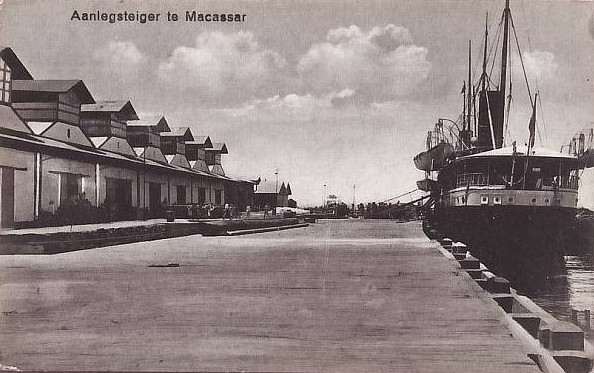
Perhaps it can be dated pre-1930 possibly before he went to Blackheath or Cambridge, which would date it as Summer/Autumn 1927. The story has under tones of Lowry’s reading of Scandinavian literature from this period such as Nordahl Grieg’s The Ship Sails On, Herman Bang’s Denied A Country and the works of Knut Hamsun. There is mention of several Far Eastern locations – Singapore, Zamboanga, Manila, Makassar and Tsjang-tsjang. Lowry visited Singapore on 13th June 1927.


There is no documentary evidence that he visited either Zamboanga or Manila both in the Philippines or the Indonesian city of Makassar on the Far East voyage. Lowry also mentions the island of Zamboanga in ‘Goya The Obscure’ published in 1930 . These Far Eastern references may have been influenced by Richard Eberhart’s poem A Bravery of Earth published in 1930. Richard Eberhart’s poem reflected his experiences at Cambridge University and his experience as a ship's hand in the Far East. Therefore, the Far Eastern references may point to a later date possibly 1930 for the version held at University of British Columbia. Tsjang-tsjang is Lowry’s first use of this fictive Eastern name for the port of Dairen which he visited in 1927 reappearing in his first novel Ultramarine.


The story is set on a pier on an unnamed river where two sailors reminisce about their adventures at sea while looking at two “tramp” steamers” tied up a the pier. The sailors’ talk meanders through memories both real and imagined which possibly reflects Lowry’s experiences on his Far East voyage of overheard conversations between the crew. Lowry attempts to unearth “the very saga of the sea” which lies hidden in memory and dream.

The idea of memory and how it distorts also has parallels in ‘China’ another short story from this period. Lowry appears to be formulating the premise that once you have made a voyage then it is more easy to imagine other voyages: “The tree of memory was here. And how much more swiftly in his mind, without words, a voyage could be anywhere. How easily he was transported to places even he had never known”. Lowry plays with the idea of memory and reality again in the short story ‘China’.

The sailor continues his fantasy as the ship voyages out in dream perhaps reflecting Lowry’s boyish fantasies of the East – meeting a sultan and his harem or trafficking in strange merchandise which are straight out of Lowry’s youthful reading of boy’s magazines. Lowry concludes; “But deep within you, rusted into your memory, buried beneath dust and ashes, your true voyages still trace eternally their course, where shipwreck, sudden death, the very saga of the sea lies hidden”, which would appear to be a precursor for Lowry’s incomplete epic The Voyage That Never Ends.

The two sailors argue before eventually falling asleep during which time the two ships take up their conversation in their dreams, repeating exaggerated and distorted memories. Gordon Bowker has noted “it sounded like Lowry conversing ironically with himself” (Pursued By Furies Pg. 139). The exaggeration of one of the sailors telling yarns is reminiscent of Lowry’s own bar-room tales he repeatedly told after his voyage. One sailor says; “You’re getting so that you don’t belong to anything. Just now you may have been lying about your nationality, just for fun, but soon you’ll have difficulty remembering your name.” This reflects Lowry’s own feeling of isolation both at sea and on his return, his use of Norwegian personas in later stories starting with his alter ego Dana Hilliot in Ultramarine and perhaps the loss of memory through drink.

The story has some striking imagery, which has become Lowry’s trademark as a writer; “rust traced a map of the world on their hulls”, “the first searched again within the battered thesaurus of the past”; “the ships had closed their faces to the dark” as Lowry transfers the memories of voyaging, ship wrecks and sudden death from the sailors to the ships. The names of the ships are worn off which appears to symbolise their loss of identity similar to one of the sailors forgetting their names. The names of ships both real and imagined continually arise in Lowry’s work.

The story is one of the first in which Lowry makes use of Scandinavian references, which may reflect his time in Blackheath studying with E.E. Kellett for entry to Cambridge University in 1927/28. Kellett published The Northern Saga in 1929, which studies Norse myths. It is possible that Lowry was influenced by Kellett’s studies. Kellett may also be the source of Lowry’s reading of Scandinavian literature such as Grieg, Berg and Hamsun. There are references to shoes being bought in Norway, Norway being a fine country; the Queen of Norway being George V’s sister – Princess Maud of Wales.


Maud was Queen of Norway as wife of King Haakon V11; “Denmark’s the biggest country in Norway” refers to the Kalmar Union in which Norway remained with Denmark until 1814, a total of 436 years. During the national romanticism of the 19th century, this period was by some referred to as the "400-Year Night", since all of the kingdom's royal, intellectual, and administrative power was centred in Copenhagen in Denmark; there is reference to Schleswig-Holstein belonging to the Danes - Schleswig and Holstein have at different times belonged in part or completely to either Denmark or Germany, or have been virtually independent of both nations. The referenda on nationality following the First World War would have still been within Lowry’s memory and is an early example of Lowry’s interest in politics/history being incorporated into his work.

There is also an early example of Lowry referring to real ships – R.M.S. Mauretania an ocean liner operated by Cunard Line which Lowry as a youth probably have seen the in the River Mersey.


Lowry uses the term Western Ocean, probably picked up from his reading of Joseph Conrad to describe the Atlantic. Lowry makes reference to Dairen but uses the Russian name Dalny for the port; “loaded bulk oil in Dalny during the Russo-Japanese War”.


Lake Charles in Louisiana is referred to as a ”spindle head”. There is no record of Lowry visiting the port in on his 1928 voyage to America to see Conrad Aiken but this may have been how he knew the port. Lowry uses several nautical terms or slang which re-occur in Ultramarine and his other stories of this period – hausers, wirerunners, ringbolt, ticket, “went deep water”, windbag, bosun, to the coaltips, “an old laundry boat”, “old canvas dodger”, “picking up washing”, “sail for sour apples with yards on the backstays, “not an old haystack like this”, “down to spindleheads”, “swaggle bellied tug”. Some of these must be based on his Far East trip but others must be from his reading of magazines such as Blue Peter mentioned in Ultramarine.

 See my post Just A Dirty Old Tramp for source of song sheet used to illustrate post.