Showing posts with label Tender is the Night Filmscript. Show all posts

Friday, 7 September 2012

Hotel Rheinischer Hof, Bonn


Lowry spent six weeks in Germany learning German in September/October 1928. Many of the German references in Lowry's work stem from this visit. Lowry told Clemens ten Holder in a letter dated  23/4/1951; ".....that was the only class I took with Herr Schmidhus, who mostly dealt with advanced students, but then that was almost the only thing I learned at all in Bonn, outside the bar of the Hotel Rheinischer Hof." (Collected Letters Vol 2 Pg. 373).


Lowry refers to the hotel in his novel Ultramarine when Dana and Popplereuter are talking during their drunken drift around Dairen; " 'Well I know.' Popplereuter took a long breath. 'I think you are very lucky and young. I must tell you that I am trying to forget. I got news here, my little girl, my little love, daughter of the house, of Hotel Rheinischer Hof. She has just got married. Oh. Hans is very unhappy, very, very, very unhappy.' " (Pg. 91). Later Lowry makes reference to the hotel in his filmscript for Fitzgerald's Tender Is The Night; "Koln slides down to RHEINISCHER HOF and Rheinischer Hof to WEINLUST, these two having been simply the signs across the front of  bars inside which Dick can be seen drinking alone as if one were looking in from the sidewalk." (The Cinema of Malcolm Lowry: a scholarly edition of Lowry's "Tender is the Night" Edited by Miguel Mota and Paul Tiessen Pg. 207)


Tuesday, 28 August 2012

Manila


Manila Bay is a natural harbour which serves the Port of Manila (on Luzon), in the Philippines.The bay is considered to be one of the best natural harbours in Southeast Asia and one of the finest in the world.


The Port of Manila dates back to Spanish and pre-Spanish rule of the Philippine Islands. It is recorded that Manila and the Philippines had trade relations with most neighboring countries at least as far back as the 9th to 12th centuries. Major trading partners included China and Japan, with ties to India through the areas that are now Malaysia and Indonesia. The Spanish-controlled Port of Manila handled trade primarily with China and other East Asian countries, with Mexico, with Arab countries, and directly with Spain from the 16th to mid-19th century when the port was opened to all trade ships. Read more on Wikipedia


Lowry visited the port between August 10th and 14th August 1927 on his voyage to the Far East aboard the Pyrrhus. Lowry arrived from Foochow before sailing onto Singapore. The stopover was one of the longest on the voyage - Yokohama (17 days), Dairen (5 days) and Singapore (5 days outward bound and 5 days inward bound).


Lowry refers to Manila in his novel Ultramarine; Barcelona I knew as well as......Manila or Surabaya." (pg. 94); "Yes we are homeward bound after Manila." (Pg. 113); "I had an experience like that on the Plato - in Manila - last voyage..." (Pg. 135) "Oor, you can buy cigars dirty cheap in Manila, boy." (Pg. 177) and "Manila, eh, reminds me of Cebu." (pg. 177). Later Lowry refers again to Manila in his filmscript for Fitzgerald's Tender Is the Night; "MANILA—GOVERNOR WOOD WAS REPORTED SERIOUSLY ILL HERE." (Pg. 148).


Stan Hugill refers to the port in his book Sailortown:

Leaving Nippon behind let us now head for the Philippines. We have noted the fact that during the windjammer days Manila was an occasional port of call for whalers, the case oil traders and so on, but between the wars trade grew in leaps and bounds and Manila harbour was never empty of ships. The dock area, or Tondo, was fairly notorious for assaults on ship-returning sailors, but the town lacked the number of seamen's pubs found elsewhere int he East. There was a rather well-got-up joint called the Mariner's Club, of which the writer was once an evening member, but apart from one or two saloons like the New York bar what a sailor calls 'real dives' didn't exist, although outside the city's limits, near the village of Kulikuli, many large brothels thrived. Of course, there was a cabaret Santiana, said to be the largest in the world, but here the girls were easy on the eye and hard on sailor's pockets. (Pg. 336).

Sunday, 19 August 2012

Rex Ingram's Mare Nostrum 1926


Lowry refers to Rex Ingram's Mare Nostrum in his filmscript for Scott Fitzgerald's Tender Is The Night in a sequence where the character Dick Divers walks past cinemas on Broadway in New York where this film is showing; "then a confused noisy superimposed shot of electric lights merges into Dick entering a cinema - again a head-on shot of its electric lighted apron front - playing Rex Ingram's Mare Nostrum: immediately on the screen in this cinema a man is seen drowning beneath the sea: the scene of drowning now fills the screen so that we feel ourselves almost drowning in the sea through which now appear on the electric apron fronts of the other theatres which we feel Dick still walking into..((The Cinema of Malcolm Lowry: a scholarly edition of Lowry's "Tender is the Night" Edited by Miguel Mota and Paul Tiessen Pgs. 165-66). Lowry is referring the end of Mare Nostrum.

Mare Nostrum (1926) is a silent film set during World War I. A Spanish merchant sailor becomes involved with a spy. It was the first production made in voluntary exile by Rex Ingram and starred his wife, Alice Terry. It is based on the novel of the same name by Vicente Blasco Ibáñez. Long thought lost, the film was re-discovered and restored in early Millennium.


As a young boy growing up in a Spanish family with a long and very distinguished maritime tradition, Ulysses Ferragut is regaled with tales of the sea by his retired uncle, the "Triton" (Apollon), and is particularly fascinated by his claim to have once seen the sea goddess Amphitrite. Though his lawyer father, Don Esteban, wants him to follow in his footsteps, Ulysses becomes a sailor.


When he is a grown man (Antonio Moreno), he uses his life savings to purchase the Mare Nostrum, a fast, modern freighter, and prospers. However, he finally gives in to his wife, Dona Cinta, for the sake of their son Esteban, and agrees to sell his ship. With the outbreak of World War I, however, the enormous profits to be made from the sudden demand for shipping ends this plan.

On a stop in Italy, Ulysses visits the ruins of Pompeii, and meets Freya Talberg (Alice Terry) and the learned Doctor Fedelmann. He soon falls in love with Freya (who looks exactly like his uncle's painting of Amphitrite). Though she later informs him that she is an Austrian spy (as is Fedelmann), Spain is neutral and his ardor is undiminished. He agrees to transport Count Kaledine to a secret rendezvous in the Mediterranean. The U-boat U-35 surfaces, takes on fuel from Ulysses' ship, and departs with Kaledine.


Meanwhile, young Esteban leaves home without permission to find his father. After a week waiting for Ulysses at his lodgings, Esteban goes back to Barcelona aboard the Californian, a British passenger ship. However, the boy is killed when the Californian is sunk by the U-35. Ulysses learns of his son's fate from a survivor, and realizes to his grief his role in the tragedy. He vows to avenge his boy.

Upon hearing of the death, Freya sends Ulysses a letter denouncing the barbarity of the act; it is intercepted by Doctor Fedelmann. That, along with Freya's admission she has fallen in love with Ulysses, convinces Fedelmann that her subordinate can no longer be trusted. She sends Freya to Marseilles, intending to betray her to the French. Freya suspects as much, and begs Ulysses to take her to safety aboard his ship. Ulysses is torn, but a vision of his son shaking his head makes him refuse. Freya is later captured, convicted, and shot by a firing squad at dawn.

As he is leaving Freya's apartment, Ulysses encounters Count Kaledine. After a brief struggle, he chases Kaledine through the streets, gathering a mob. Kaledine is caught and taken into custody.
Ulysses then employs the Mare Nostrum in the service of the Allies, arming her with a deck gun, replacing his crew with French military sailors, and transporting munitions to Salonica. Only longtime family friend and sea cook Caragol refuses to leave him. On the voyage, they are intercepted by the U-35. With the Mare Nostrum torpedoed and doomed, Ulysses mans the abandoned deck gun and sinks the U-35. As Ulysses descends into the ocean depths, Amphitrite rises to embrace him. Wikipedia


The German submarine and the Wilhelmstrasse spy system during the World War are the theme of Rex Ingram's picturization of Blasco Ibanez's "Mare Nostrum," which was presented last night before an audience that appeared to be left slightly dazed by the weird delivery of the film. It is an effort that in the second half has its full quota of thrills, but in the end it reminds one of the Von Tirpitz edict—"Spurlos Versenkt!" The heroine and the hero have met their deaths and so have the villains; the comedian alone is left to drift back to his Spanish port aboard a flimsy raft.


Mr. Ingram goes about the unfolding of this narrative with a dislike of haste. He seems to tell you that you must gaze upon his story as he tells it or not at all, and therefore it is not until just before the first half has come to a close that interest in the picture is really awakened; that happens to be through a scene in which a stout German Frau Doktor of the German Secret Service, her faithful and beautiful aid, Freya Talberg, and a Spanish skipper, drink a toast to the Emperor Josef. A photograph of the late ruler of the dual Empire is before the trio, it having been covered until that instant by a picture of Victor Emmanuel. Ulysses Ferragrut, the Spanish skipper, tosses down his toast with a sneer and evidently follows it with a silent one to his "King and Country." He is in a predicament, for although he is a married man he has become desperately smitten with Freya's fair beauty and he sorely needs a good-paying cargo for his vessel, the Mare Nostrum. He takes a monocled submarine officer out to where a German U boat replenishes its oil tanks.

The first sequence dealing with the sinking of a British vessel by a submarine is graphically filmed. The Mediterranean is a tame stretch of blue to a wireless operator. He had just said "Hello" to his colleague aboard the Californian. Then one perceives the submersible sneaking after its prey, and subsequently the Californian receives her death blow in an explosion of spray and fire. Aboard the other vessel all is tranquil; then the wireless operator gets the S. O. S., but gradually the sinking ship is covered by water. The commander of the submarine pushes his cap back over his shorn head and checks off the British steamship as having been sunk.

Later, Ferragut, who comes from a family of the sea, learns that his son who was seeking him in Italy was among those who perished aboard the English vessel. He is vengeful, yet in love. In fact he has to run away from the blue eyes of the German woman spy, who herself is betrayed by her own countrymen.

There is an emphatically exciting scene where one of the German submarine officers is chased through the narrow streets of a town. The crowd is close upon his heels, but he manages to avoid them until he is discovered by Ferragut, who had first shouted "spy!"


Mr. Ingram spares no feelings to bring out Ibanez's points. Freya is arrested as a spy and taken from Marseilles to the St. Lazare prison, in Paris. In the course of usual motion picture events Freya would have been saved at the last minute. One awaits it in this film. She is taken to Vincennes in the early morning, and the soldiers line up. The buglers sound "Taps" after making a flourish with their brass instruments. Freya had made a petition to be shot in furs, feathers and expensive clothes; it was granted. She had walked proudly to the white stake against which she rests. Her hands had been tied with rope. An officer winces before the order is given to fire. When that order comes the rifles blaze and nothing more is seen of Freya until a weird idea or nebulous figures under the sea is portrayed at the end of the picture.

Alice Terry is fair, but unconvincing in the rôle of the German spy. She is too phlegmatic for the part. Antonio Moreno figures as the susceptible Ferragut. Mr. Moreno has plenty of character in his countenance, but he does seem to be a ready victim to a pair of blue eyes. His path is filled with weird coincidences over which he, of course, has no control. Fernand Mailly fills the character of the German spy who knows something about firing a torpedo from a submersible, and Andre von Engelman officiates as the U-boat commander. These two men are decidedly impressive.

Aside from the effective photography in Spain, Italy and France and the dramatic sequences concerned with the submarine's deadly work and the shooting of a woman spy, this production does not do justice to the talent of the man who made "The Four Horsemen of the Apocalypse" and "Scaramouche." His last production, "The Arab," was lovely but a slow story that did not boast of much in the way of drama. NY Times

Monday, 13 August 2012

D W Griffith's Intolerance 1916


Intolerance: Love's Struggle Through the Ages is a 1916 American silent film directed by D. W. Griffith and is considered one of the great masterpieces of the Silent Era. The three-and-a-half hour epic intercuts four parallel storylines each separated by several centuries: A contemporary melodrama of crime and redemption; a Judean story: Christ’s mission and death; a French story: the events surrounding the St. Bartholomew's Day massacre of 1572; and a Babylonian story: the fall of the Babylonian Empire to Persia in 539 BC.

Intolerance was made partly in response to critics who protested against Griffith's previous film, The Birth of a Nation (1915), charging that it had overt racist content, characterizing racism as people's intolerance of other people's views. Read more on Wikipedia

Lowry refers to the film several times; in his film script for Fitzgerald's Tender Is The Night; "Abe gives his own background in movies: "I saw Buster Keaton in Seven Chances - I saw Intolerance." (The Cinema of Malcolm Lowry: a scholarly edition of Lowry's "Tender is the Night" Pg.73 ); later in October Ferry to Gabriola; "No, but what's really funny, it was a D.W. Griffith film, Intolerance — or maybe Way Down East." Or perhaps (and ah, the eerie significance of cinemas in our life, Ethan thought, as if they related to the afterlife, as if we knew." (Pg.29) and in a letter to Downie Kirk dated 13 December 1950; "We went to see the old silent film Intolerance - played straight through without any music at all - a great mistake, since Griffith wrote his own score." (Collected Letters Vol 2 Pg.307 )


Monday, 2 July 2012

Stavanger, Norway


The city is the third largest urban zone in Norway and the administrative centre of Rogaland county. Located on the Stavanger peninsula in Southwest Norway.

Lowry refers to the city in his first novel Ultramarine; "Matt told them that he had struck the new skipper, a Stavanger man, for calling him a Bergener." (Ultramarine Pg 17) and in later works; "STAVANGER NORWAY— THE ROTOR SHIP IS REPORTED AGROUND HERE" (The Cinema of Malcolm Lowry: a scholarly edition of Lowry's "Tender is the Night" Edited by Miguel Mota and Paul Tiessen Pg. 156).; DalfounStavanger (Norsk) 'Through The Panama' (Pg. 68).


There is no record of Lowry visiting the city.

Les Halles, Paris


Les Halles is an area of Paris, France, located in the 1er arrondissement, just south of the fashionable rue Montorgueil. It is named after the large central wholesale marketplace, which was demolished in 1971, to be replaced with an underground modern shopping precinct, the Forum des Halles.Read more on Wikipedia


Lowry refers to the market in his film script for Fitzgerald's novel; "Rosemary: Dick's seeing Nicole home and is going to meet us at Les Halles. He said you'd insist on going to Les Halles anyway." and  "fade in to Les Halles, the market, with its loaded stalls of fruit and flowers, in the early dawn, Rosemary, Clay and Abe eating onion soup and drinking coffee in one of the fruit merchant's bars.There is the thunder of  hooves on the cobble outside." (The Cinema of Malcolm Lowry: a scholarly edition of Lowry's "Tender is the Night" Edited by Miguel Mota and Paul Tiessen Pg. 83); and "Dissolve to Dick still walking in the dawn, through Les Halles, half dead with despair and fatigue, amid the beautiful bustle of life and energy around him." (Pg. 208).


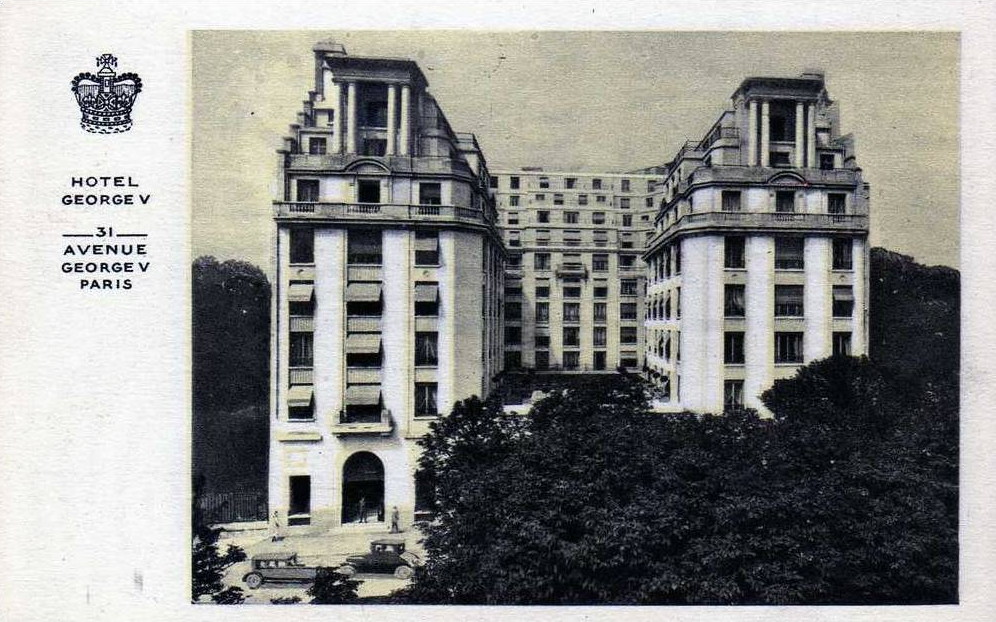
Hotel Roi George, Paris


A fictional hotel in Fitzgerald's Tender Is The Night. Bruccoli suggests that Fitzgerald may have based it on the Hotel George V at 31 Avenue George V - which opened in May 1928. In the novel, the manager conceals evidence in a murder. Therefore Fitzgerald had to invent a hotel name. (Matthew J. Bruccoli with Judith S. Baugham: Reader's Companion F. Scott Fitzgerald Tender Is The Night Pg. 85).

Lowry refers 4 times to the hotel in his film script for Fitzgerald's novel; "the children swinging fades into the Diver's suite at the Hotel Roi George" (The Cinema of Malcolm Lowry: a scholarly edition of Lowry's "Tender is the Night" Edited by Miguel Mota and Paul Tiessen Pg. 85); "(quite apart from the fact that useful Macbeth himself is the patron of the Roi George) (Pg. 119); Dick Diver receives a telegram at the hotel (Pg. 122) and "as for that matter the washroom perhaps had been a mnemonic of the bathroom a the Roi George. (Pg. 152).

Zelli's Club, Paris

Louise Brooks at Zelli's 
Zelli's Club was the most famous of the nightclubs in Paris owned by Joe Zelli (On right in above photograph).


He opened this club in 1922 and it closed 10 years later. It was considered to be less classy than Le Grand Duc and was regularly raided by the police. Nevertheless, it was always crowded and a membership card was needed to enter an underground dance hall. 


This club was located at 16 bis rue Fontaine which had previously been La Feria cafe. This was a large rectangular underground dance hall on two floors in an almost Moorish style. The main floor area had a bandstand, stage, dance floor, ornate pillars and was littered with tables. At one end was an arched alcove with mirrored walls. The entrance made way onto a balcony overlooking the main floor with a modern American-style bar. Here, were what Zelli called ‘royal boxes’, set out along the balcony. Patrons could look down upon the festivities taking place on the floor below as well as talk to other parties on telephones in each box. One day a little Italian caricaturist arrived called Zito and over four years he drew all the famous guests and visitors to Zelli’s and these sketches filled the walls downstairs. Read more on Jazz Age Club

Lowry refers to the night club in his film script for Fitzgerald's novel Tender Is The Night; "Now we are in the Rue Blanche and we pass Zelli's" (The Cinema of Malcolm Lowry: a scholarly edition of Lowry's "Tender is the Night" Edited by Miguel Mota and Paul Tiessen Pg. 78).


Thursday, 21 June 2012

Casino de Paris


The Casino de Paris, located at 16, rue de Clichy, in the 9th arrondissement, is one of the well known music halls of Paris, with a history dating back to the 18th century.

The first building at this location where shows could be mounted was erected by the Duc de Richelieu around 1730, while after the Revolution the site was renamed Jardin de Tivoli and was the venue for fireworks displays. In 1880 it became the Palace Theatre, which housed shows of different types, including wrestling.

It was at the beginning of the First World War, however, that the modern Casino de Paris began to take shape, when the venue was converted into a cinema and music hall. Read more on Wikipedia

Lowry refers to a revue called Paris en Fleures at the Casino de Paris which featured Maurice Chevalier to emphasis a point he is making in the film script for Tender Is The Night about the creation of atmosphere in the film with the use of signs, words and advertisements of Paris in 1926; "Here the signs are not only historically accurate - your research department being at the moment the memory of one of your writers - and Paris en Fleures at the Casino de Paris" (The Cinema of Malcolm Lowry: a scholarly edition of Lowry's "Tender is the Night" Edited by Miguel Mota and Paul Tiessen Pg. 75). We can assume that Lowry must have recalled a poster of the revue or even seen the revue on his 1926 visit to the city with The Leys School. He alludes to the poster again; "Nearby the Metro is held a moment: Maurice Chevalier's grin" and later; "Cut to our party getting out of the taxi in front of the Casino de Paris. We see the billboards with posters of Chevalier - the show Paris En Fleures. (Pg. 78). Later in the film script the posters are reprised in another scene set in Paris (Pg.129); "Don't you think that the Casino de Paris and Monmartre will be a bit much for you?" (Pg. 77).

Maurice Chevalier


Maurice Auguste Chevalier (September 12, 1888 – January 1, 1972) was a French actor, singer, entertainer and a noted Sprechgesang performer. Read more on Wikipedia

Lowry refers to a revue called  Paris en Fleures which featured Maurice Chevalier at the Casino de Paris to emphasis a point he is making in the film script for Tender Is The Night about the creation of atmosphere in the film with the use of signs, words and advertisements of Paris in 1926; "Here the signs are not only historically accurate - your research department being at the moment the memory of one of your writers - and Paris en Fleures at the Casino de Paris" (The Cinema of Malcolm Lowry: a scholarly edition of Lowry's "Tender is the Night" Edited by Miguel Mota and Paul Tiessen Pg. 75). We can assume that Lowry must have recalled a poster of the revue or even seen the revue on his 1926 visit to the city with The Leys School. He alludes to the poster again; "Nearby the Metro is held a moment: Maurice Chevalier's grin" and later; "Cut to our party getting out of the taxi in front of the Casino de Paris. We see the billboards with posters of Chevalier - the show Paris En Fleures. (Pg. 78). Later in the film script the posters are reprised in another scene set in Paris (Pg.129).


We can only speculate why Lowry refers to the poster of Maurice Chevalier. He may be using the poster in the same way as he did with one of Maria Landrock in Under The Volcano - using later knowledge of a person's politics or role to post-date on an earlier period in the person's life - though the reader or viewer would know about the person's politics. When Lowry was writing the film script, Chevalier had been accused on collaborating with the Nazis during the occupation of France.

Paris En Fleures


Paris En Fleures was a revue performed at the Casino de Paris. Launched in November 1925 starring the Simone Roseray and Jacques Capella, the Dolly Sisters, Maurice Chevalier and Yvonne Vallee. Simone Roseray and Jacques Capella's dances in a Grecian number, India of a thousand and one nights and Versailles in the autumn were greatly admired.

Lowry refers to the revue to emphasis a point he is making in the film script for Tender Is The Night about the creation of atmosphere in the film with the use of signs, words and advertisements of Paris in 1926; "Here the signs are not only historically accurate - your research department being at the moment the memory of one of your writers - and Paris en Fleures at the Casino de Paris" (The Cinema of Malcolm Lowry: a scholarly edition of Lowry's "Tender is the Night" Edited by Miguel Mota and Paul Tiessen Pg. 75). We can assume that Lowry must have recalled a poster of the revue or even seen the revue on his 1926 visit to the city with The Leys School. He alludes to the poster again; "Nearby the Metro is held a moment: Maurice Chevalier's grin" and later; "Cut to our party getting out of the taxi in front of the Casino de Paris. We see the billboards with posters of Chevalier - the show Paris En Fleures. (Pg. 78). Later in the film script the posters are reprised in another scene set in Paris (Pg.129).

We can only speculate why Lowry refers to this poster. He may be using the poster in the same way as he did with one of Maria Landrock in Under The Volcano - using later knowledge of a person's politics or role to post-date on an earlier period in the person's life - though the reader or viewer would know about the person's politics. When Lowry was writing the film script, Chevalier had been accused on collaborating with the Nazis during the occupation of France.

Lowry may also be drawing on the background of the other performers in the Revue -Simone Roseray and Jacques Capella and their links to the Riveria - the setting of part of Tender Is The Night. In the Spring of 1924 that they came to prominence after making a splash on the Riviera in early 1924, especially in Nice, they became one of the main attractions (along with Rose Amy, Gaby Montbreuse and Rene Thano) in the Concert Mayol show Toute Neu from March 1924. Here they gave ‘a number of acrobatic dances which show off the beauty of physical form of both partners’ in such exotic numbers as Nuit de Sheherazade, La Favourite and L’Amant (the lover), La Boite de Jeux – Le Jeu des Dames (play of the ladies) and La Javaise des Roses – L’Ame des Roses (the heart of the roses). At the same time they doubled at the fashionable Canari nightclub in the Rue Faubourg. Read more on Jazz Age Club


California Straight Ahead 1925


A film directed by Harry A. Pollard starring Reginald Day, Tom Hayden, Gertrude Olmstead and Tom Wilson.

Lowry refers to the film to emphasis a point he is making in the film script for Tender Is The Night about the creation of atmosphere in the film with the use of signs, words and advertisements of Paris in 1926; "Here the signs are not only historically accurate - your research department being at the moment the memory of one of your writers - Ca Qua Ca Gaze, for instance, was the French name given to Reginald Denny's California Straight Ahead, which was playing in Paris in 1926..." (The Cinema of Malcolm Lowry: a scholarly edition of Lowry's "Tender is the Night" Edited by Miguel Mota and Paul Tiessen Pg. 75). We can assume that Lowry must have recalled a poster of the film on his 1926 visit to the city with The Leys School.

Long after the death of Wallace Reid, writer Byron Morgan was still coming up with the type of road and racing stories he created for the late star. Reginald Denny has the lead in this especially hilarious comedy-thriller. Because he stays too long at his bachelor party, Tom Hayden (Denny) shows up late to his wedding to Betty Browne (Gertrude Olmstead). As a result, the ceremony is called off and Hayden's family disowns him. So he and his valet Sambo (Tom Wilson) decide to take the double-decker wedding car on a cross-country trip, paying their way by supplying tourists with chicken dinners and radio music. In the desert, Hayden runs into Betty and her angry parents (Fred Esmelton and Lucille Ward). When animals break loose from a nearby circus, Hayden saves the Brownes and when he arrives in Los Angeles, he drives Mr. Browne's car in a big race. He wins -- and wins Betty. ~ Janiss Garza, Rovi


Wednesday, 20 June 2012

Bal Tabarin, Paris


The Bal Tabarin was a cabaret in Paris at 36 Rue Victor Masse in the ninth arrondissement at the foot of Montmartre. Located near the Moulin Rouge in Pigalle. Founded in 1904 by composer and conductor Auguste Bosc, it was built on the site of shacks near the cabaret singers The Trestles Tabarin. Read more on Wikipedia

Lowry probably knew the cabaret from his 1933-34 stay in the city; "Another party gets out of a taxi before the brilliant sign of the Bal Taborin (Lowry's spelling)." ( The Cinema of Malcolm Lowry: a scholarly edition of Lowry's "Tender is the Night" Edited by Miguel Mota and Paul Tiessen Pg. 79).

Au Lapin Agile, Paris


Lapin Agile is a famous Montmartre cabaret, at 22 Rue des Saules, 18th arrondissement of Paris, France.It was originally called "Cabaret des Assassins". Tradition relates that the cabaret received this name because a band of assassins broke in and killed the owner's son. The cabaret was more than twenty years old when, in 1875, the artist Andre Gill painted the sign that was to suggest its permanent name. It was a picture of a rabbit jumping out of a saucepan, and residents began calling their neighborhood night-club "Le Lapin à Gill", meaning "Gill's rabbit". Read more on Wikipedia

Lowry probably knew the cabaret from his 1933-34 stay in the city; "and we see that our party have left the Boulevard and struck off into the section behind it, heading for some place like Le lapin Agile." ( The Cinema of Malcolm Lowry: a scholarly edition of Lowry's "Tender is the Night" Edited by Miguel Mota and Paul Tiessen Pg. 79).

L'Eglise St Germain des Prés, Paris


The Benedictine Abbey of Saint-Germain-des-Prés, just beyond the outskirts of early medieval Paris, was the burial place of Merovingian kings of Neustria. At that time, the Left Bank of Paris was prone to flooding from the Seine, so much of the land could not be built upon and the Abbey stood in the middle of fields, or prés in French, thereby explaining its appellation. The abbey church remains as the Église de Saint-Germain-des-Prés, Paris.


Lowry probably knew the church from his 1933-34 stay in the city; "We are in the car with the girls as they pass ...the spire of Saint-Germain-des-Prés" ( The Cinema of Malcolm Lowry: a scholarly edition of Lowry's "Tender is the Night" Edited by Miguel Mota and Paul Tiessen Pg. 70).


Statue de Diderot, Place St-Germain-des-Prés, Paris


Statue de Diderot sculpted by Jean Gautherin and unveiled in 1886. Located in the Place St-Germain-des-Prés near to where he lived then Taranne street .


Lowry probably saw the statue on his 1933-34 stay in the city; ""We are in the car with the girls as they pass ... the statue of Diderot.." ( The Cinema of Malcolm Lowry: a scholarly edition of Lowry's "Tender is the Night" Edited by Miguel Mota and Paul Tiessen Pg. 70).

Quai Malaquais, Paris


A dock located along the Seine in Paris, in the 6th arrondissement, between the banks Conti and Voltaire.


Lowry probably knew the dock from his 1933-34 stay in the city; "then they are going along the Quai Malaquais." ( The Cinema of Malcolm Lowry: a scholarly edition of Lowry's "Tender is the Night" Edited by Miguel Mota and Paul Tiessen Pg. 70).


Musée du Louvre, Paris


The Musée du Louvre or simply the Louvre. A central landmark of Paris, France, it is located on the Right Bank of the Seine in the 1st arrondissement (district). Read more on Wikipedia

Lowry probably first saw or visited the museum on his visit to Paris in 1926 with his school The Leys for a hockey tournament though he would have possibly seen it many times during his 1933-34 stay in the city; "and we see the Louvre across the river, dappled light beneath the plane trees, a barge going downstream."  (The Cinema of Malcolm Lowry: a scholarly edition of Lowry's "Tender is the Night" Edited by Miguel Mota and Paul Tiessen Pg. 71).

Citroën Advert, Eiffel Tower 1925-1934


From 1925 to 1934, André Citroën rented the Eiffel Tower and had the Citroën brand name emblazoned with  250,000 incandescent lights. 600 kilometres of electric flex were required for the letters, which were 30 metres high.


Lowry probably saw the sign on his visit to Paris in 1926 with his school The Leys for a hockey tournament though he would have also seen it on his 1933-34 stay in the city; "the vertical sign which marks the seemingly ubiquitous Eiffel Tower: Citroën". ( The Cinema of Malcolm Lowry: a scholarly edition of Lowry's "Tender is the Night" Edited by Miguel Mota and Paul Tiessen Pg. 78).


Moulin Rouge, Paris


Moulin Rouge is a cabaret in Paris, France. It was built in 1889 by Joseph Oller, who also owned the Paris Olympia. Close to Montmartre in the Paris district of Pigalle on Boulevard de Clichy in the 18th arrondissement, it is marked by the red windmill on its roof.

There is no documentation that Lowry visited the cabaret. Lowry references the cabaret in the filmscript to Fitzgerald's Tender Is The Night; "we see signs for Moulin Rouge." and ""the red mecacano windmill of the Moulin Rouge revolves." (The Cinema of Malcolm Lowry: a scholarly edition of Lowry's "Tender is the Night" Edited by Miguel Mota and Paul Tiessen Pg. 75 and 79).