Showing posts with label Ports. Show all posts

Wednesday, 19 September 2012

Kings Lynn, Norfolk


King's Lynn, also known as Lynn, is a sea port and market town standing on the river Ouse in the county of Norfolk in the East of England. It is situated 97 miles (156 km) north of London and 44 miles (71 km) west of Norwich.


In the 16th and 17th centuries, the town's main export was grain. The town was no longer a major international port, although some iron and timber were still imported. Like other East Coast ports, King's Lynn suffered from the discovery of the Americas, which benefited ports on the West Coast of England. It was also affected by the growth of London which attracted the town's trade.


The port of Kings Lynn continued to thrive in the 19th century. Alexandra Dock was built in 1869. Bentinck Dock was built in 1883.

Lowry refers to the port in his novel Ultramarine; "The quartermaster had one green eye, and one brown one and Hilliot knew he came from King's Lynn, the decaying port in the wilds of Norfolk." (Pg. 38)

Monday, 10 September 2012

Beaumont, Texas


The Port of Beaumont is a deep-water port located in Beaumont, Texas near the mouth of the Neches River.
Its history as a deepwater port dates to 1908, however, when a canal nine feet deep was dug in the Neches River from Beaumont to the Port Arthur ship channel. In 1916, the channel was deepened to 25 feet and a turning basin scooped out in the bend of the river. Local businessmen, meanwhile, had developed dock facilities on the waterfront. The port channel was deepened to 30 feet in 1922, increasing Beaumont's importance as a shipping centre.


Lowry refers to the port in his novel Ultramarine when one of the crew of Oedipus Tyrannus recalls visiting the port; " ' Beaumont, yes. We tied up to the trees in the park there, why, it's only a spindle-head, that place, that's all it is, just a spindle-head. It was a bit of an event too, a ship coming there. And all the girls from the park came and dabbled their feet in the water. We had 'em up on the ship afterwards for a dance. We put an officer ashore there with rheumatism.' " (Pg. 176).

There is no record of Lowry visiting the port on his 1929 trip to the USA. We must assume that Lowry recorded a conversation of a crew member of Pyrrhus.

Lowry's reference to a "spindle-head' probably has to do with Beaumont's oil business. A spindle top is a headstock or tailstock for a spindle or boring bar. Oil was discovered at nearby Spindletop on January 10, 1901. Spindletop became the first major oil field and one of the largest in American history. With the discovery of oil at Spindletop, Beaumont's population grew from 9,000 in January 1901 to 30,000 in March 1901.

The park mentioned by Lowry is probably Riverfront Park.


Saturday, 8 September 2012

Moji, Japan


Moji-ku is a ward of Kitakyūshū, Fukuoka Prefecture, Japan. It is the former city of Moji which was one of five cities merged to create Kitakyūshū in 1963. It faces the city of Shimonoseki across the Kanmon Straits between Honshū and Kyūshū.


Moji was first made into a port by Suematsu Kenchō with the financial backing of Shibusawa Eiichi in 1889. It was chiefly used for the transportation of coal, though there is a traditional song about the sale of bananas imported into Moji from Southeast Asia which survives to this day (Banana no tataki-uri). Moji was also the departure point for many troops in the Russo-Japanese War who were ferried across to Korea.


Lowry refers to the port in his novel Ultramarine when Norman is warning Dana about contracting venereal disease when he goes ashore in Tsjang Tsjang (Dairen); "Voyage before last, in Muji, it was, I picked up, the finest dose you ever saw, voyage before last in the Maharajah - she's lying in this port now" (Pg. 34) and again when the crew of Oedipus Tyrannus are talking about how Smithy contracted venereal disease in Moji; "got it in Muji he had, and never said damn all to anybody.." (Pg. 61).


There is no record that Lowry visited the port on his 1927 voyage to the Far East. Lowry was familiar with J. Johnston Abraham's The Surgeon's Log, which features a visit to the port where his ship takes on coal (Pgs. 122-144), which may have inspired him to feature the port in Ultramarine. Or Lowry may have known that Moji was a regular port of call for Blue Funnel ships to take on coal on trips to Japan.


Monday, 27 August 2012

Colombo, Sri Lanka


Colombo is the largest city of Sri Lanka. It is located on the west coast of the island and adjacent to Sri Jayawardenapura Kotte, the capital of Sri Lanka. Due to its large harbour and its strategic position along the East-West sea trade routes, Colombo was known to ancient traders 2,000 years ago. It was made the capital of the island when Sri Lanka was ceded to the British Empire in 1815, and its status as capital was retained when the nation became independent in 1948. In 1978, when administrative functions were moved to Sri Jayawardenepura Kotte, Colombo was designated as the commercial capital of Sri Lanka.


The Port of Colombo fell to the British in 1796, when they first arrived on the island. However it remained a Kandyan Kingdom military outpost until it was surrendered in 1815. The Port was made the capital of the new British crown colony called Ceylon. The British decided to build houses and civilian buildings rather than making it into a military centre, giving birth to the modern Port of Colombo


In 1912, the Port was converted into a sheltered harbour, and the Colombo Port Commission was established in 1913. Much of the city was planned during the British occupation of the Port of Colombo.

Lowry visited the port on the homeward leg of his Far Voyage arriving from Penang on the 30th August and leaving on 1st September 1927 en route to Suez. Lowry's only reference to Sri Lanka was in a letter to David Markson dated 10th Setember 1951; "...(Though I've been to Ceylon, Likewise Formosa. Likewise China & Japan. Also Dollarton). (Collected Letters Vol 2 Pg. 433).


Stan Hugill in his book recalls the sailortown area of Colombo:

Travelling farther East we come to Colombo. Here, around the Pettah or market area, were mainly beer houses and jewellers who specialised in selling rubies, emeralds and such like, or in the transforming them into necklaces, bracelets, and ear-rings for the benefit of seamen. "Eet weel make a nice-a gift for your sweetheart, sahib", they would softly croon into one's ear, then produce a bottle of beer to help one make up one's mind. Years ago in Hill Street there were many brothels occupied by Sinhalese girls which seamen liked to visit, but in the thirties, I think, they were closed by the police. Sailortown Pg. 325


Tuesday, 7 August 2012

American Hatoba (Pier), Kobe


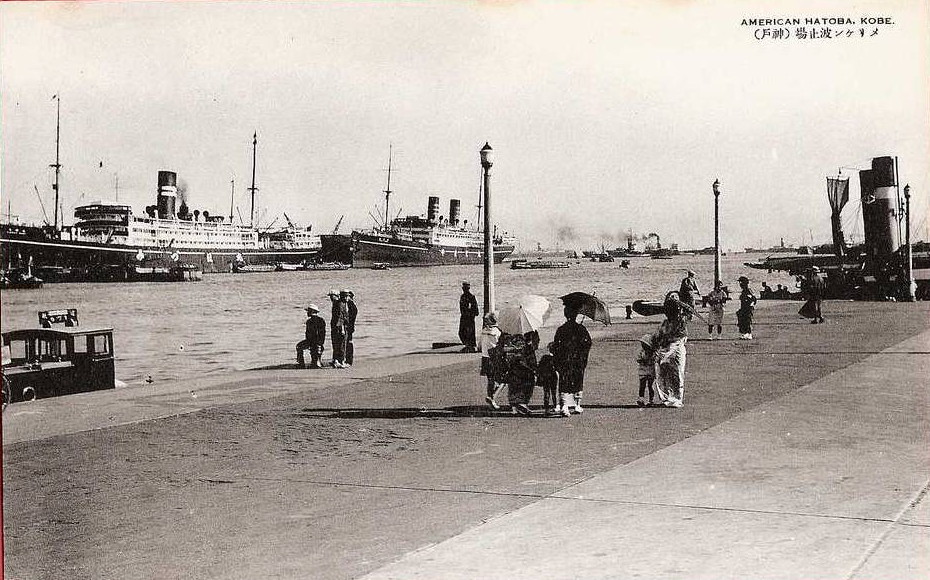
American Hatoba (Pier), for many years the main pier in Kobe. Until 1922, large ships couldn’t dock in the harbor, so the hooting launches maneuvered continuously through the multitudes of junks and other small vessels to shuttle passengers and their luggage between anchored ships and the pier. As the harbor developed, American Hatoba lost its importance as place of entry and in 1987 the pier finally vanished as it was incorporated into Meriken Park, Meriken being the local pronunciation of American.


Lowry refers to the pier during Dana'a drift around the red light district of Dairen in his novel Ultramarine - while Dana is waiting for a film to start adverts appear on the screen; "The American Hatoba, the Oriental Hotel, and the Kyo-Bashi...Oh these infernal advertisments on the screen!" ( Pg.98). It is not impossible that adverts for the Japanese mainland may have been advertised in Japanese occupied Manchuria. Or it might be Lowry simply transposing Kobe into Dairen.


Monday, 6 August 2012

Kobe, Japan


Kobe is the fifth-largest city in Japan and is the capital city of Hyōgo Prefecture on the southern side of the main island of Honshū, approximately 30 km (19 mi) west of Osaka. Kobe did not exist in its current form until its founding in 1889. Its name comes from "kanbe" an archaic title for supporters of the city's Ikuta Shrine. Hyōgo-ku or Ōwada Anchorage or Hyōgo Port is an area is the historical heart of the city. Shinkaichi in Hyogo-ku was once the commercial centre of Kobe, but was heavily damaged during World War II, and since Hyogo-ku has lost much of its former prominence.


Kobe Port was first opened to foreign trade in 1868. At that time it had no wharfs to serve large vessels so loading and offloading had to take place offshore. This situation persisted for a long time.


Finally in 1907, due to dramatic increases in trade, plans were made for extensive new port facilities. During the so-called First Stage Kobe Port Development Plan the Shinko (New Harbor) piers No. 1 through No. 4 were constructed (1907-1922). In 1919, work began on the Second Stage, which included the construction of Shinko piers No.4 (East) through No.6, Naka Pier and Hyogo Piers (No.1, No.2 Piers). This was completed in 1939. Kobe had now the largest berth in Japan, with a depth of 12m.


Lowry visited the port between 28th June and 1st July 1927 on his voyage to the Far East. He had obscure reference to the port in the 1927 poem 'The Glory of the Sea':

'Where's Chang tonight? he asked the Third;
'It's past the time he came off watch:
Half-hour ago eight bells I heard;
I've got a cake of Kobe trout,
Tinned, by crimes! I bed your Scotch-'
'Chang? Chang's dead: his heart came out.'

1914  Map of Kobe: 1. Sannomiya Station (currently Motomachi Station); 2. Motomachidori; 3. Sakaemachidori; 4. Higashi Yuenchi Park; 5. Oriental Hotel; 6. Kaigandori; 7. Customs House; 8. American Hatoba.

Lowry also refers to the old port of Kobe during Dana'a drift around the red light district of Dairen in his novel Ultramarine - while Dana is waiting for a film to start adverts appear on the screen; "The American Hatoba, the Oriental Hotel, and the Kyo-Bashi...Oh these infernal advertisments on the screen!" ( Pg.98). It is not impossible that adverts for the Japanese mainland may have been advertised in Japanese occupied Manchuria. Or it might be Lowry simply transposing Kobe into Dairen.


It is possible that Lowry experienced the incident with the Japanese prostitute in Kobe as described by Joseph Ward in a letter to the Liverpool Daily Post dated 14/4/1962. Ward  says:

....he seemed a lost soul and his reproductive organ was certainly in the back row, it was a teeny-weeny object that disgusted a Japanese geisha girl to such an extent as to frustrate her into impolite abuse.


Stan Hugill describes Kobe in Sailortown as follows:

With some seamen Kobe was Number One, and although, perhaps, it did not have the variety of sailor entertainment offered in Yokohama, still had plenty of girls and bordels. Perhaps the reason why some seamen preferred Kobe to Yokohama was the fact that most girls here wore Western dress. 


The main street, the Motomachi, was lined on both sides with small and large bars, cafes and dancehalls, the numbers of "garus" or girls found in them being legion. Down the alleyways, too, more dives were to be found, and as well as dives, Kobe was famous for its so-called Sex Stores.....


The bars and dives best known to seamen were the Honey Drop, Union Bar, Kimi Bar, Golden Bat, the Frisco, Fuji Bar, Hana Bar, Havana Bar, Academy Bar, Rose Bar, Young Bar, Yokohamate, and Boston Bar. 


The native kuruwa, called Fukuwara or"Lucky Moor", was to be found in Hyogo the older port adjacent to Kobe - near to Theatre Street of Shinkaiichi. It was a replica of the one in Yokohama, but a bit livelier perhaps, since it was situated in a busy market and theatre district. The biggest houses were the Fukanariro and the Daikichiro. In these more modern times, however, what with the competition of the Western-dressed dance hostesses and the more Western-styled bars, these old fashioned native brothel areas were not patronised as much by seamen as they were olden times. 


Even if one wanted to go to such a place and said tho the Japanese taxi-driver, "Yoshiwara", it was usual for the driver, who had probably driven hundreds of sailors to bars and brothels, and who believed than that the latter did himself, to take his customer to a Western-styled dive. The girls in this district charged 2.5 yen a "short time", 5 yen an hour, and 8 yen "all night", the yen at this time being worth 1s. 2d." (Pgs. 334-335).


Sunday, 5 August 2012

Hong Kong


Hong Kong is one of two special administrative regions of the People's Republic of China, the other being Macau. A city-state situated on China's south coast and enclosed by the Pearl River Delta and South China Sea, Hong Kong became a colony of the British Empire after the First Opium War (1839–42). Originally confined to Hong Kong Island, the colony's boundaries were extended in stages to the Kowloon Peninsula and the New Territories by 1898.


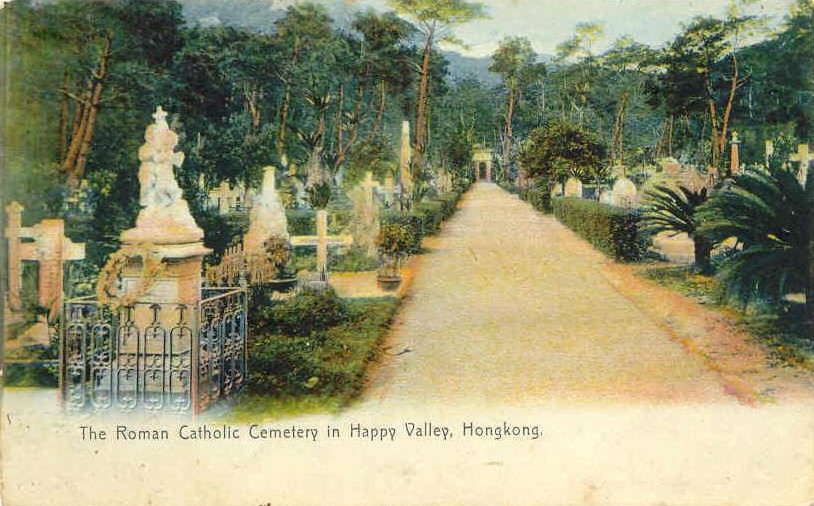
Lowry visited Hong Kong on his voyage to the Far East in 1927. Lowry arrived on board Pyrrhus on July 19th 1927 and departed on the 21st. Lowry refers to Hong Kong in his novel Ultramarine; "That Sunday, bound for Hong Kong, we had come up on deck". (Pg.76) and "that night the Oedipus Tyrannus had reached another port, Hong Kong. She glided in silently at four bells in the evening. Lanterns were singing at the water's edge, an army of lights marched with torches up the slope to the barracks, a few natives came aboard wearing enormous cymbal-shaped hats. Behind the ship the Peninsular Hotel at Kowloon loomed darkly..." (Pg.76); " 'story about a Chink fireman I heard and the English sailor at the Christian cemetery in Hong Kong. ' " (Pg.173).


Thursday, 26 July 2012

Paraguay


Paraguay is a landlocked country in South America. It is bordered by Argentina to the south and southwest, Brazil to the east and northeast, and Bolivia to the northwest. Paraguay lies on both banks of the Paraguay River, which runs through the center of the country from north to south. Due to its central location in South America, it is sometimes referred to as Corazón de América, or the Heart of America.

Lowry refers to the country in his novel Ultramarine; Popplereuter says "This time we made a trip to Sudamerika - Santos and Paraguay, San Francisco, Florianpolis - Port Allegre. We have been rolling around the world." (P.86).


The port which Popplereuter most likely visited was Asunción - because the Paraguay River runs right next to Asunción the city is served by a river terminal in the downtown area. This port is strategically located inside a bay and it is where most freight enters and leaves the country.

São Francisco do Sul, Brazil


São Francisco do Sul is a municipality in the Brazilian state of Santa Catarina. It was founded as a village by the Portuguese in 1658. It is situated on the northern end of the island of São Francisco do Sul at the entrance to the Bay of Babitonga. The city has a major port facility.

Lowry refers to the port in his novel Ultramarine; Popplereuter says "This time we made a trip to Sudamerika - Santos and Paraguay, San Francisco, Florianpolis - Port Allegre. We have been rolling around the world." (P.86). Note Lowry spells the port incorrectly.

Florianópolis, Brazil


Florianópolis is the capital city and second largest city of Santa Catarina state in the Southern region of Brazil. It is composed of one main island, the Island of Santa Catarina (Ilha de Santa Catarina), a continental part and the surrounding small islands. The name Florianópolis was meant to be a tribute to Marshal Floriano Peixoto, the second President (1891–1894) of the Republic of the United States of Brazil and from Greek term πόλις (polis, meaning "city"). Until 1893, the city was called Nossa Senhora do Desterro (Our Lady of Banishment) or simply "Desterro".

Lowry refers to the port in his novel Ultramarine; Popplereuter says "This time we made a trip to Sudamerika - Santos and Paraguay, San Francisco, Florianpolis - Port Allegre. We have been rolling around the world." (P.86).

Santos, Brazil


Santos is a municipality in the São Paulo state of Brazil, founded in 1546 by the Portuguese nobleman Brás Cubas. It is partially located on the island of São Vicente, which harbors both the city of Santos and the city of São Vicente, and partially on the mainland. Santos has the biggest seaport in Latin America. Coffee exports from the Port of Santos gave rise to the city and mostly accounted for the wealth of the city at the turn of the 19th to the 20th century.

Lowry refers to the port in his novel Ultramarine; Popplereuter says "This time we made a trip to Sudamerika - Santos and Paraguay, San Francisco, Florianpolis - Port Allegre. We have been rolling around the world." (P.86).

Wednesday, 25 July 2012

Penang


Penang is a state in Malaysia and the name of its constituent island, located on the northwest coast of Peninsular Malaysia by the Strait of Malacca. It is bordered by Kedah in the north and east, and Perak in the south. Penang is the second smallest Malaysian state in area after Perlis.

Lowry visited the island on his 1927 voyage to the Far East. Lowry arrived on board the Blue Funnel ship Pyrrhus on 9th June 1927 and departed the next day for Port Swettenham. Lowry returned on the homeward leg of his voyage from Port Swettenham arriving 25th August and leaving for Colombo on the 26th August 1927.

In the short story 'On Board West Hardaway', Lowry set scenes in the port centred around the death of the pigeon adopted by Norman, a crew member; "The West Hardaway reached the Straits Settlements and unloaded some of her cargo in Penang, leaning with a quiet gratitude against the wharf, sea-weary after her long journey." (Pg. 29).

Lowry refers to the island in his first novel Ultramarine based on the voyage; "I am on a ship, I am going to Japan - or aren't I?" then he lists all the places he is due to visit including Penang.(Pg. 18); "And I went ashore with Joe in Penang."(Pg. 58), "Why! I went ashore in Penang."(Pg. 58); "I played billiards in Penang with Joe Ward, in the Chinese quarter. (Pg. 58) and "I went ashore with Joe in Penang." (Pg. 73).


Penang Road Penang
Lowry also referred to the port in his later fiction including Chapter 6 of Under The Volcano'A curly-headed boy stood on the fo'c'sle head of the Philoctetes as she docked in Penang strumming his latest composition on the ukelele.' (Pg.167); and in the short story 'Elephant and Colosseum'; "Since but for his duty to Rosemary he would have transferred in those days to a sister ship at Penang."  (Pg. 170).

Campbell Street Penang
Stan Hugill describes the port of Penang as follows:

Not far from Singapore lies Penang, a port known to eastern traders since the days of the tea clipper. In modern times sailors ashore would visit the Fun and Frolic, a rather popular amusement park, after the style of the New World in Singapore. Here were Chinese theatres, bars, gambling and dance-halls with Eurasian and Chineses hostesses, and Malay 'ronggeng' sections - where a member of the crowd would endeavour to out-dance a Malay girl, usually a hopeless task. Prostitutes frequented these Malayan amusement parks in large numbers, but in Penang also there was a regular quarter in Campbell Street containing several Chinese bordels. One sailor-frequented pub was the Can-do, and others were the Prince of Wales Bar, the Hong Kong Bar, and Penang Bar. Sailortown Pg. 325